

Weekly Index No. 043
On slowness, the deliberate journey, and why the way you get there has always been part of the point.

OPENING FRAME
At some point in the last decade, the journey became something to be compressed to nothing — a transition to be endured between the place you left and the place you wanted to be. A flight is not a journey; it is a teleportation with worse food. The thing being lost in all this compression is not just time. It is calibration. The adjustment of pace, attention, and expectation that used to happen between departure and arrival, the slow shift in light and temperature and language that told you where you were going before you got there. A small counter-movement is gathering around the idea that this adjustment matters. That speed was never the point.
SIGNAL OF THE WEEK
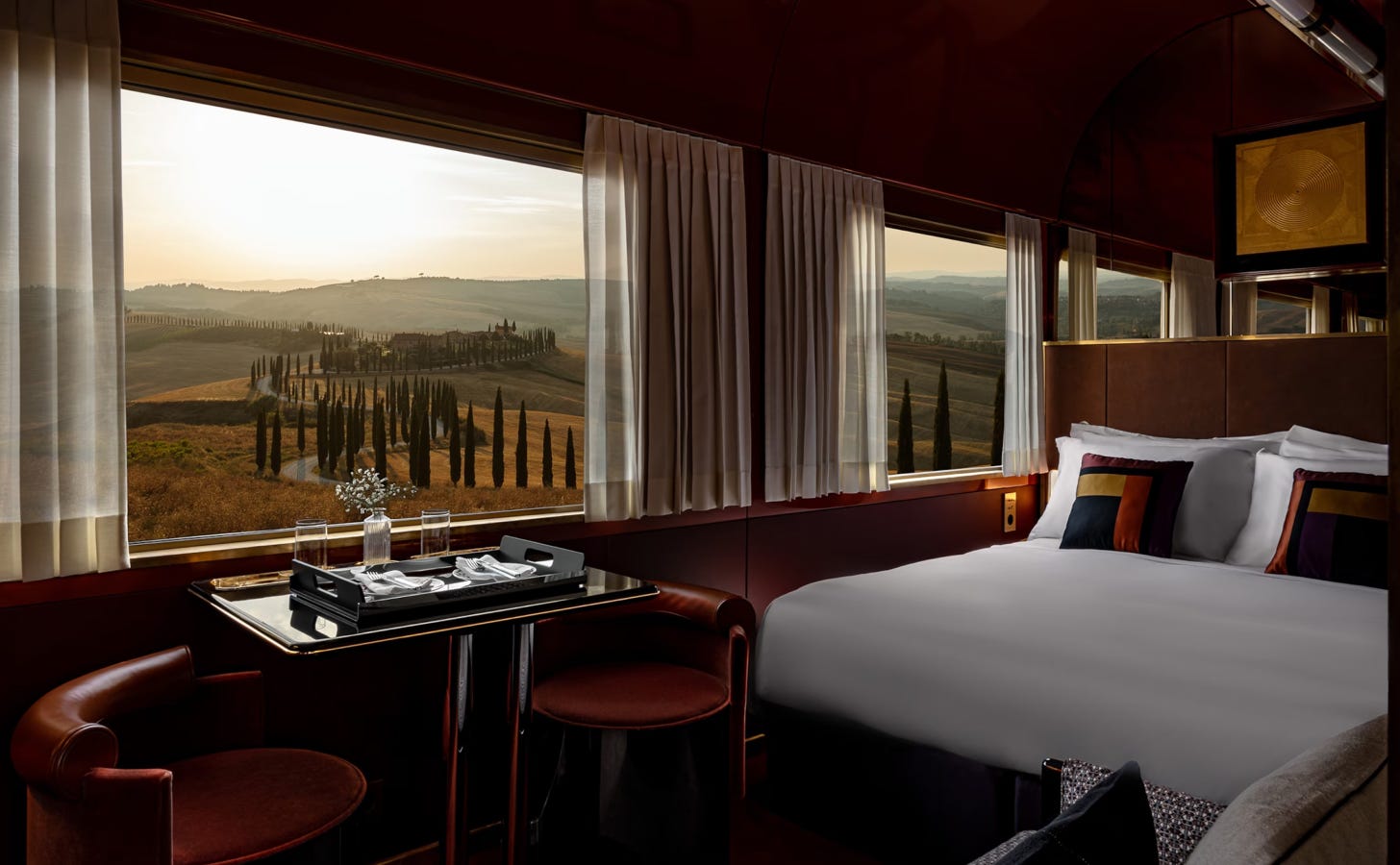
The Night Train Returns
Brussels, Belgium — On 26 March 2026, European Sleeper departed Paris Gare du Nord at 18:03 and arrived in Berlin the following morning, reviving overnight rail between two of Europe's most important cities after ÖBB discontinued the Nightjet route at the end of 2025. Townspeople gathered at the platform in Aulnoye-Aymeries waving French and German flags as the train passed through. By the time it crossed into Belgium, most passengers had found their compartments and settled in for the night. European Sleeper — a Dutch-Belgian cooperative that has already carried over 240,000 passengers on its Brussels–Amsterdam–Berlin–Prague line — is now building what amounts to a private night-train network: a Paris–Hamburg extension opens July 2026, and a new Brussels–Cologne–Bern–Milan route begins 9 September. The logic is that a bed on a sleeper is also a hotel room, a short-haul flight avoided, and — less quantifiably — a reminder that Europe has a geography, and that geography has a texture you only register when you move through it at ground level.
OBJECT OF NOTE
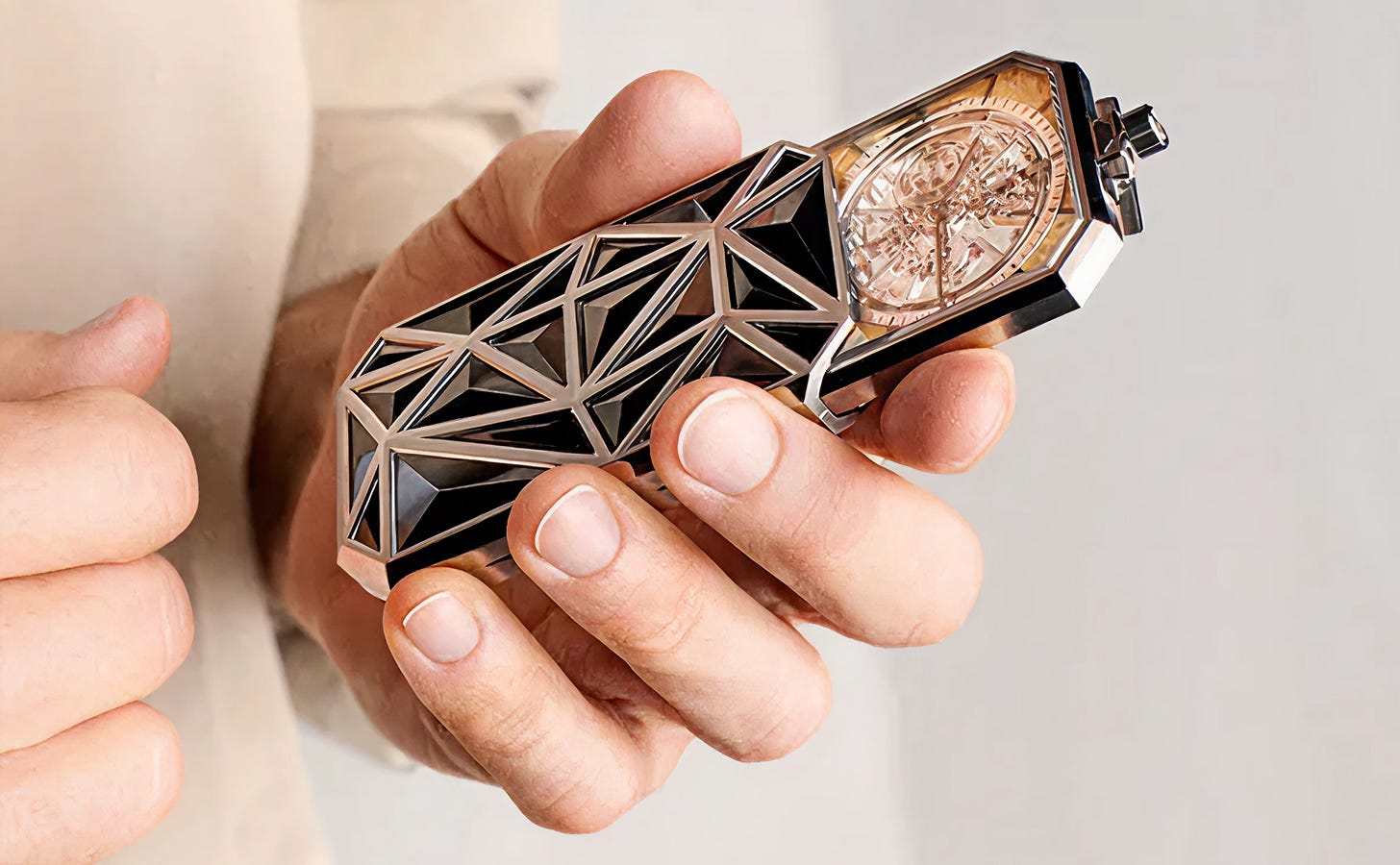
The Month in a Movement
At Watches & Wonders Geneva this month, Audemars Piguet unveiled the Atelier des Établisseurs — a new platform that revives the 18th-century établissage model of the Vallée de Joux, where independent craftspeople working from home workshops produced individual components later assembled into finished watches. The inaugural piece that most embodies the project is the Établisseurs Nomade: a convertible pocket watch and table clock whose movement has been skeletonised entirely by hand using a traditional hacksaw — a technique AP has preserved since the 1930s — by a named team of 18 contributors. The process takes up to a month and leaves no margin for error. "Today, 99.99 percent of movements are prepared mechanically," said Sébastian Vivas, AP's heritage and museum director. The Atelier is not a nostalgia exercise. It is a structural argument that some things cannot be accelerated without becoming something else entirely.
TECH FORWARD
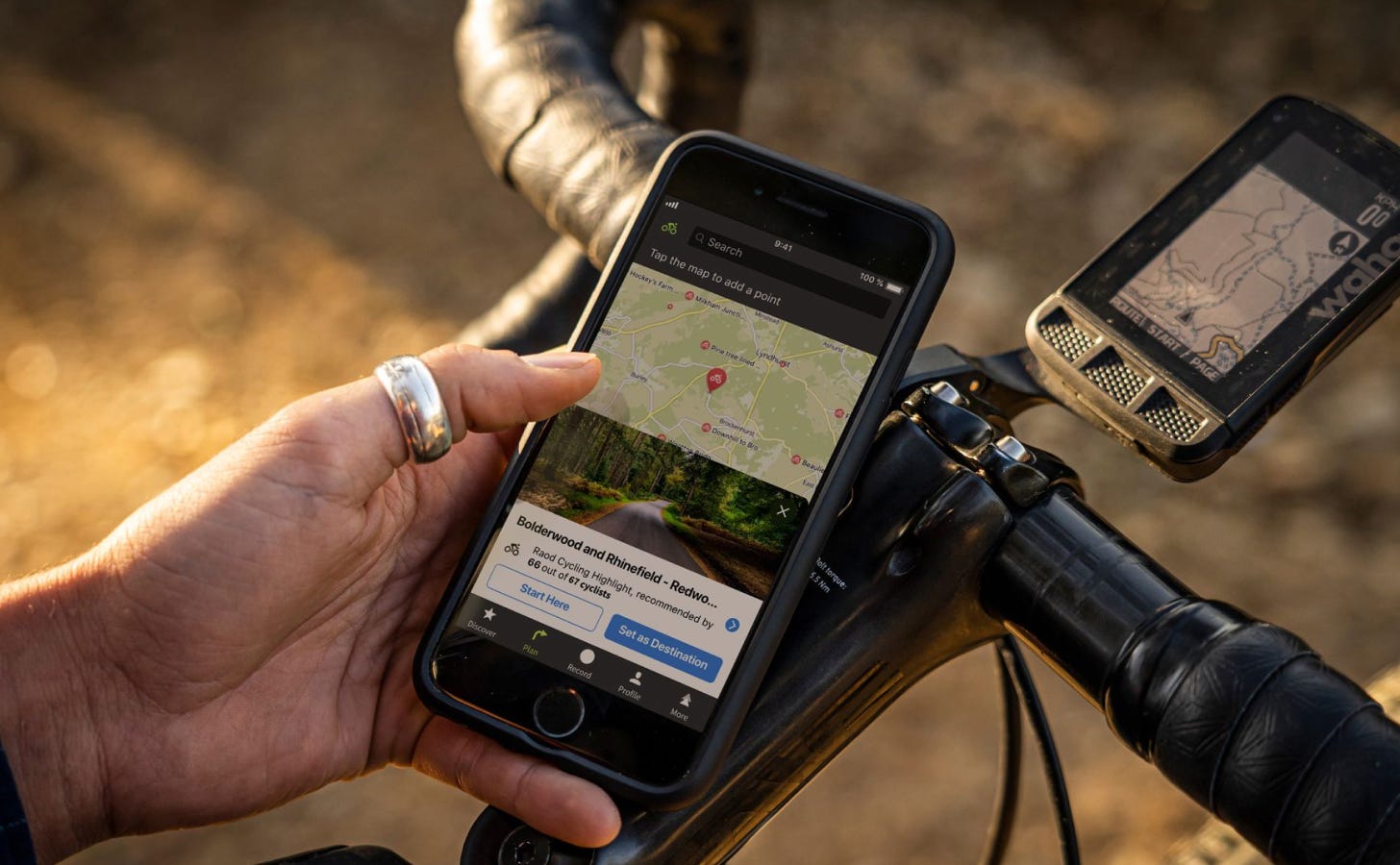
The Map That Takes Its Time
Komoot has become the quiet infrastructure of slow travel in a way that Google Maps has never managed, because it was built around a different premise: not the fastest route, but the best one. Founded in 2010 in Potsdam and now used by over 40 million people across cycling, hiking, and trail running, Komoot aggregates community-contributed route data to surface paths that are genuinely interesting — old railway trails, forest roads, coastal paths with accurate surface condition tagging — rather than optimised for speed. The product's design keeps the phone in the pocket: audio navigation cues are timed to the terrain, not to the notification cycle. It is a technology that expands the definition of where you can go without making the going feel managed. At a moment when the slowness conversation is everywhere in travel, Komoot is the tool that has been quietly enabling it for fifteen years.
LIVING WELL
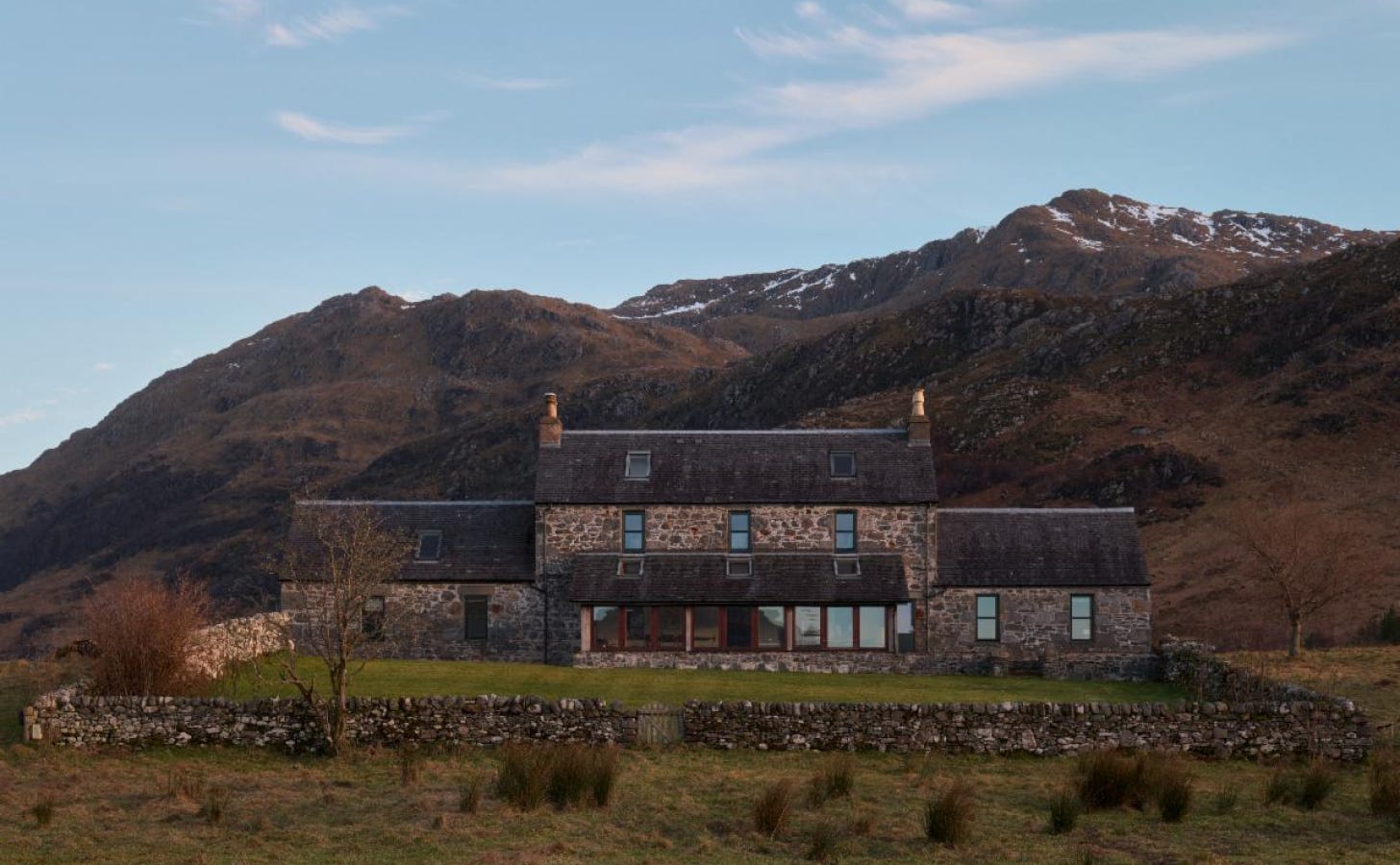
Boat or Boots
Kilchoan Estate by Dunton opens in June 2026 on Scotland's Knoydart Peninsula — 13,000 acres of private Highland wilderness between Loch Nevis and Loch Hourn, reachable only by a 30-minute ferry from Mallaig or a 27km hike from Glenfinnan. The property is Dunton's first European opening, following the same conservation-led model it established at Dunton Hot Springs in the Colorado Rockies: five restored stone and timber cottages (two to five bedrooms each), renovated by Waldo Works with interiors drawing on British and Irish makers including Bute, Mourne Textiles, and the Isle Mill, plus a communal Long House where meals are taken together from Highland produce. The estate's own description of the project is worth noting: "a place we have walked, argued over, fallen in love with, and patiently brought back to life — never in a hurry, and certainly not to create one more 'luxury experience' for people too busy to enjoy it." Rates are fully inclusive and the ferry transfer is part of the package. The point is the getting there.
QUOTE OF THE WEEK
"It is not the destination that matters, but the quality of attention you bring to the journey."
— Bruce Chatwin, The Songlines, 1987
CLOSING
Until next Sunday—Notice more.