

Weekly Index No. 042
On provenance, the story behind the object, and why origin matters more than ever.

OPENING FRAME
There is a word that keeps surfacing in conversations about fashion, design, food, and art this spring: provenance. Not as a niche collector's concern but as something closer to a moral position. Where a thing was made, by whom, from what, using what knowledge — these questions are being asked more urgently and by more people than at any point in recent memory. Partly this is regulatory. Partly it is exhaustion with a world that generates convincing images of objects faster than the objects themselves can be made. And partly it is something harder to name: a hunger for things that carry a verifiable past.
SIGNAL OF THE WEEK

The Knowledge That Was Never Decorative
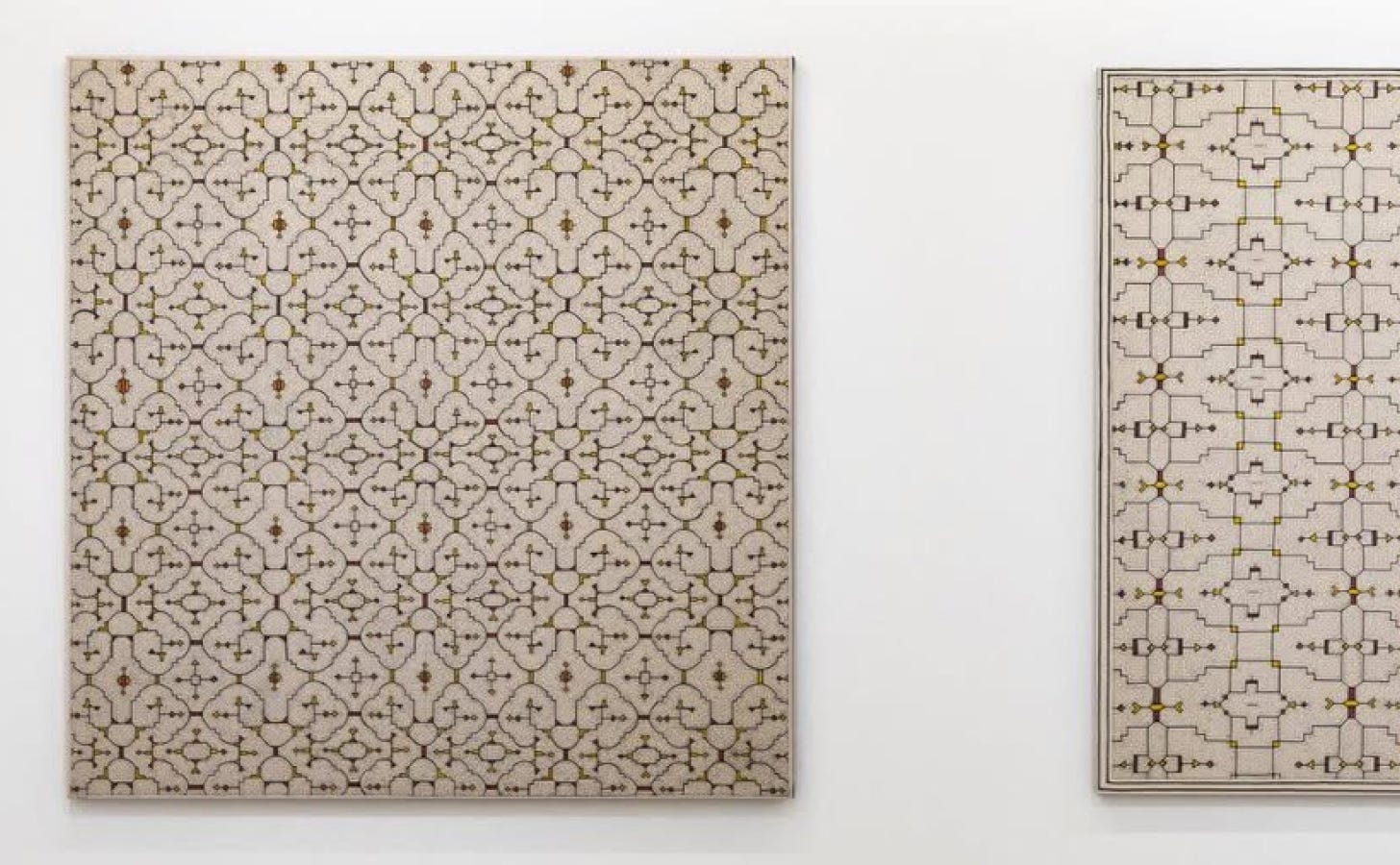
Venice, Italy — The 61st Venice Biennale, In Minor Keys, opens 9 May under the posthumous curatorial vision of Koyo Kouoh — the first African woman appointed to lead the exhibition, who died in May 2025 before she could see it realised. Her curatorial text, written weeks before her death and delivered to the Biennale's president on 8 April 2025, is one of the most quietly radical documents in recent exhibition history. It argues directly that centuries of colonial thinking dismissed local, Indigenous, and territorial knowledges as decorative or devotional — secondary to the supposedly universal claims of Western art. The Peru Pavilion makes this argument concrete: Sara Flores, born 1950 in the Shipibo-Konibo community of Tambomayo along the Ucayali River, is the first Indigenous artist to represent Peru at the Biennale. Her practice is Kené — a visual language passed down matrilineally through generations, applied with vegetal dyes on wild cotton, without rulers or preparatory sketches. Each line maps the rivers, plants, and cosmology of the Amazon. Morocco's debut pavilion, Asǝṭṭa, presents Amina Agueznay's ritual weaving as embodied architecture. What Venice is staging this year is not a celebration of the marginal. It is a correction of the record.
OBJECT OF NOTE
The Line That Comes From the Forest
Sara Flores is already represented by White Cube and collected internationally, but the work retains the logic of its origins in ways that resist assimilation. Kené — the Shipibo-Konibo design system she has practised since childhood — is not a style. It is a knowledge system: the patterns have names, they map spiritual territories, they are believed to carry healing properties. Flores prepares her own pigments from Amazonian bark and plants, applies them to wild cotton canvas, and works freehand through a process her Shipibo name — Soi Biri, meaning "precisely drawn" — describes exactly. Her daughters Deysi and Pilar contribute the secondary ketana lines, making each work a collaborative act of transmission. A Flores painting sourced through White Cube does not just carry the mark of a hand. It carries the geography of a river, the memory of a ritual, the survival of a language. That is a different category of object entirely.
TECH FORWARD

The Passport That Proves It
The EU's Digital Product Passport is the regulatory story that the fashion and design worlds have been slow to reckon with. From July 2026, the EU's central DPP registry goes live — a system requiring products to carry a scannable digital identity containing verified data on materials, origin, supply chain, and lifecycle. For textiles the full delegated act lands in 2027, with enforcement from 2028, but brands are already treating 2026 as the preparation window. What this means in practice: a QR code on a jacket that tells you the wool came from a specific farm in the Veneto, was woven in a named mill in Prato, and was cut and sewn three kilometres from where you're standing. Italy, which has been reshoring luxury production since early 2026 as freight costs and tariff exposure made long supply chains unviable, is the EU's most advanced testing ground. The passport turns provenance from a marketing claim into a verifiable fact. That is not a small shift.
LIVING WELL
The Outermost One
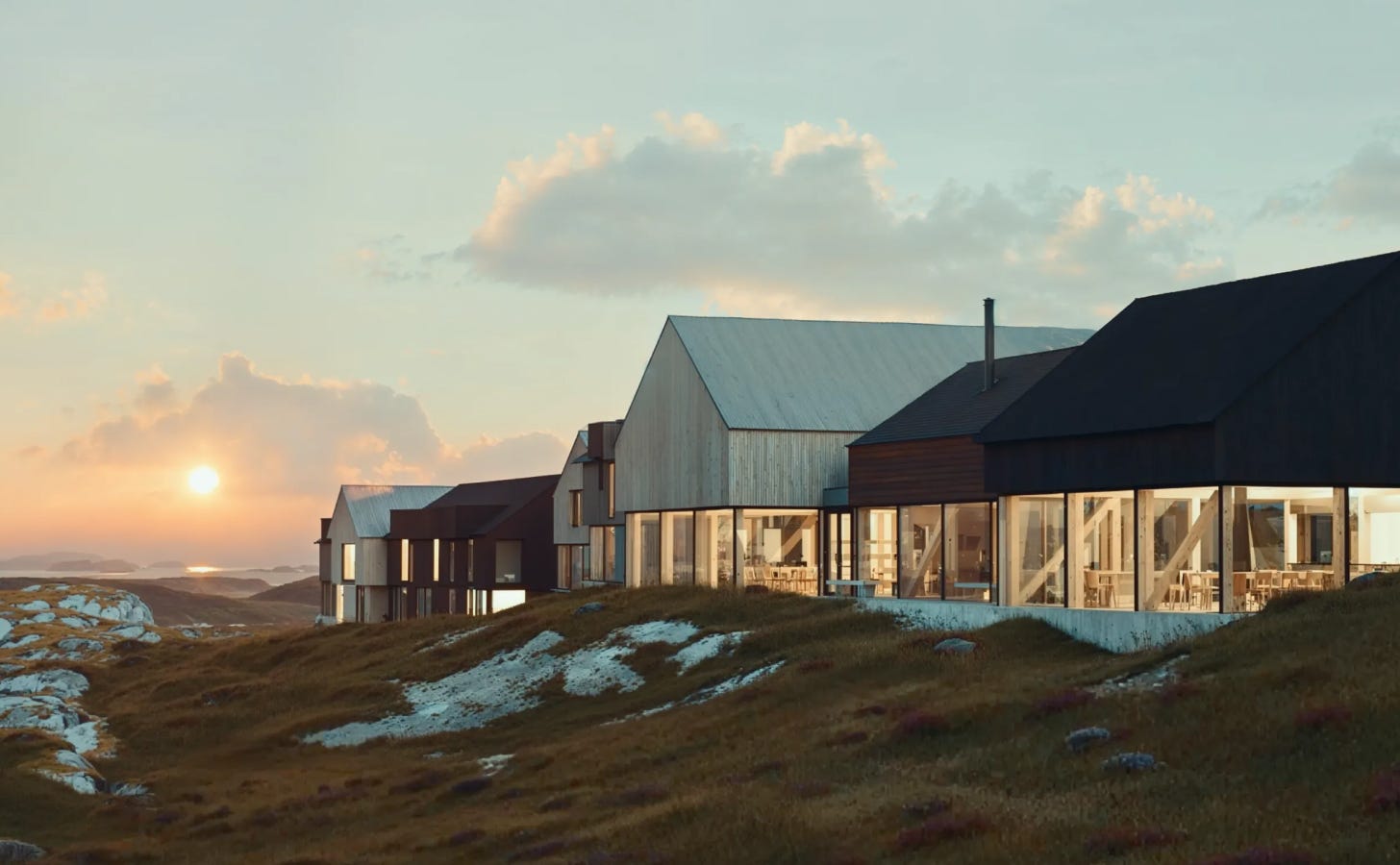
Ytri Island Retreat opened this spring on Træna, a 477-island Norwegian archipelago 60 kilometres off the Helgeland coast at the Arctic Circle — ferry-access only, the next landmass west being Greenland. The project took ten years to develop: initiated in 2016 by local resident Moa Björnson as a community-led research programme asking whether tourism could strengthen a small island rather than exhaust it, it evolved slowly into a 38-room hotel designed by Vardehaugen Architects in the idiom of the working fishing village it sits beside. The restaurant serves a daily four-course menu and a 12-course chef's table, both built around whatever the sea offered that morning. There is a wood-fired sauna at the water's edge, a boathouse, a greenhouse. Ytri's name is Old Norse for "the outer one." The journey in — slow, by ferry, through the islands — is described by the hotel as part of the experience rather than the preamble to it. That is the only honest way to put it.
QUOTE OF THE WEEK
“The enduring time of capital and empire maligned local, Indigenous and terrestrial knowledges as chimeric, and dismissed co-constitutive artistic practices as artisanal, intended for decoration or devotional rituals.”
— Koyo Kouoh, curatorial text for In Minor Keys, 61st Venice Biennale
CLOSING
Until next Sunday—Notice more.